
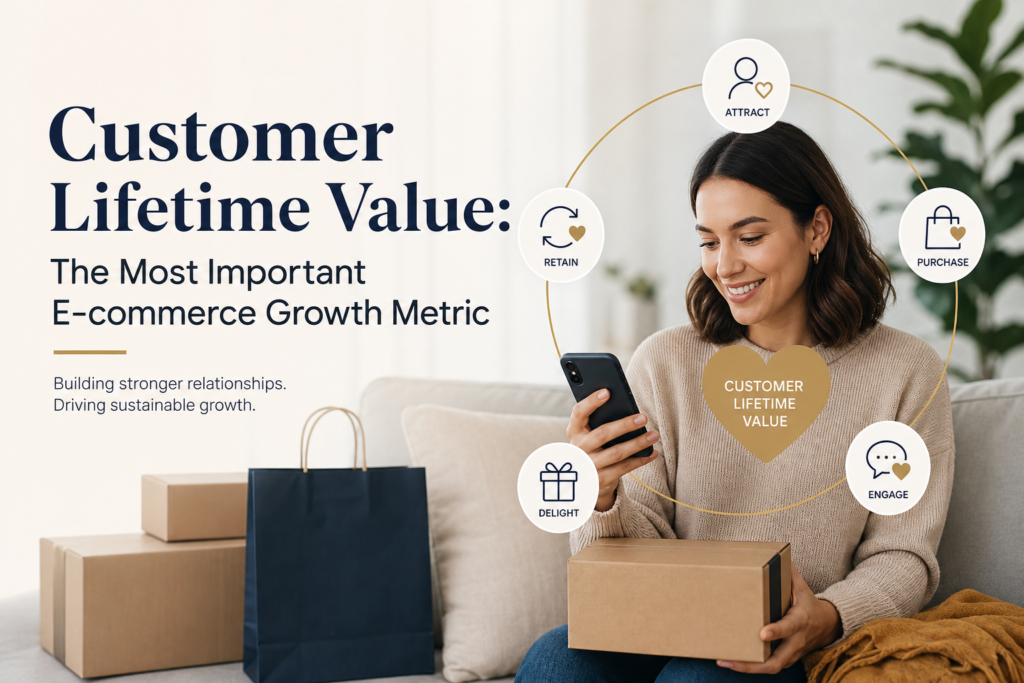
In the rapidly evolving landscape of e-commerce, understanding your customers has never been more crucial. Among the various metrics that businesses utilize, Customer Lifetime Value (CLV) stands out as a critical indicator of long-term sustainability and growth. This article will delve into what CLV is, why it matters, and how you can leverage it to maximize your e-commerce success.
What is Customer Lifetime Value?
Customer Lifetime Value refers to the total worth of a customer to your business over the entire duration of their relationship. Unlike short-term metrics that focus on immediate sales, CLV emphasizes the long-term revenue a customer will generate. Understanding this metric allows businesses to make informed decisions about marketing spend, customer acquisition strategies, and retention efforts.
Why Is CLV the Cornerstone of E-commerce Growth?
CLV provides insights that guide various aspects of your business, impacting everything from your marketing strategies to product development.
1. Informing Marketing Spend
For decision-makers, knowing how much a customer is worth over their lifetime can help tailor marketing budgets effectively. A higher CLV justifies more significant investments in acquiring new customers. Conversely, for customers with lower CLV, more cost-effective marketing strategies may be necessary.
2. Enhancing Customer Retention
Understanding the factors that contribute to CLV allows you to focus on retention tactics. Retaining existing customers often costs less than acquiring new ones, making it crucial for boosting overall profitability.
3. Product and Service Development
Insights gained from CLV can inform what products or services are worth developing. Analyzing purchase patterns can help in creating offerings that align more closely with customer needs, ultimately increasing CLV.
How to Calculate Customer Lifetime Value

Calculating CLV involves a straightforward formula that considers average purchase value, purchase frequency, and customer lifespan. Here’s a simplified breakdown:
- Average Purchase Value: Total revenue over a specific time divided by the number of purchases.
- Purchase Frequency: Total purchases over a specific time divided by the number of unique customers.
- Customer Lifespan: Average number of years a customer continues to buy from your business.
Using these variables, you can calculate CLV with the following formula:
CLV = Average Purchase Value × Purchase Frequency × Customer Lifespan
Strategies to Improve Customer Lifetime Value

Now that you recognize the importance of CLV and how to calculate it, let’s explore practical strategies for improving this vital metric.
1. Enhance Customer Experience
Providing an exceptional customer experience can elevate CLV dramatically. Focus on simplifying navigation, ensuring fast shipping, and offering stellar customer support to boost satisfaction and encourage repeat business.
2. Loyalty Programs
Loyalty programs incentivize repeat purchases. By rewarding customers for their loyalty, you can significantly extend their lifespan and increase their total spend over time.
3. Personalized Marketing
Utilizing personalized marketing tactics, such as tailored promotions and recommendations based on past purchases, can enhance customer engagement and drive repeat sales.
Conclusion
Customer Lifetime Value is more than just a number; it’s a vital metric that can shape your e-commerce strategy. By understanding and optimizing CLV, you can make informed decisions that lead to sustainable growth. Prioritizing customer relationships and tailoring your business practices to their needs will not only improve CLV but also contribute to the long-term success of your e-commerce venture.