Build to be found — by people and by AI.
SEO and content were used to create ongoing discoverability and category authority, supported by an answer-engine mindset so educational material could remain useful as search behavior evolved.
HAZWOPER OSHA Training came to us as a single-channel e-commerce business, individual course sales, no content engine, no retention system, no paid acquisition. We built the growth engine that changed that.
Strategy, acquisition and lifecycle systems were connected around one commercial objective — sustainable growth.
That left the business exposed to the limits of a single-channel model. There was no deliberate organic authority engine, no structured paid demand capture, no lifecycle system to recover or nurture opportunities, and no connected growth infrastructure tying those pieces together.
The assignment was to turn separate marketing activities into a revenue-producing growth function.
SEO and content were used to create ongoing discoverability and category authority, supported by an answer-engine mindset so educational material could remain useful as search behavior evolved.
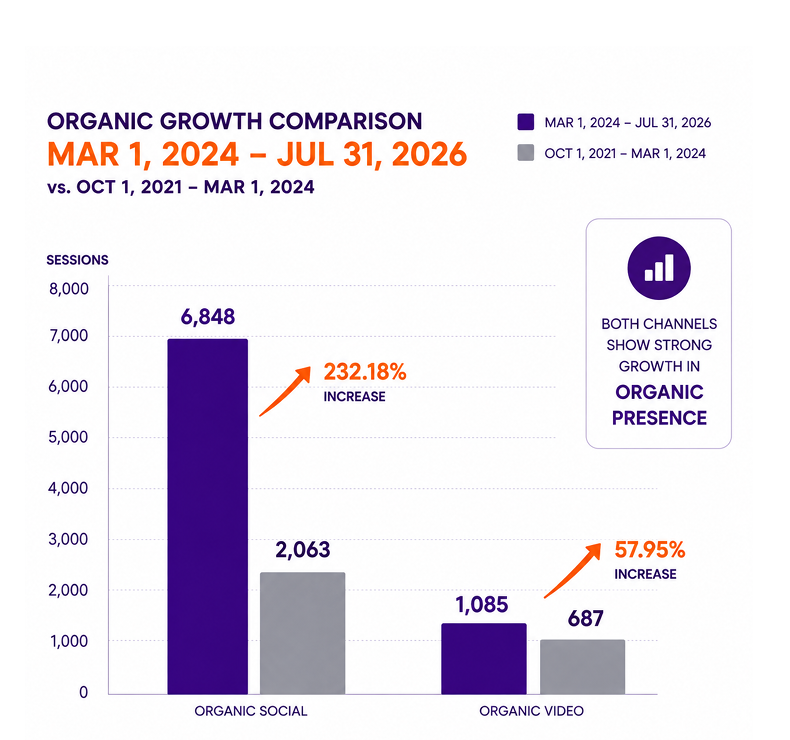
LinkedIn, Facebook, Instagram and YouTube became distribution channels for educational content, promotions, newsletters and articles — helping HAZWOPER appear more consistently in the market.
Course promotion and retargeting campaigns built to capture and convert high-intent traffic.
Email and outbound systems were designed to recover unfinished purchases, nurture leads, re-engage high-intent visitors and activate the existing customer database.
The visible campaigns sat on top of a practical stack for research, visitor identification, outreach, CRM, chat and measurement.
Identify opportunities, understand search demand and build content around real market behavior.
Identify and prioritize high-intent website visitors who would otherwise remain anonymous.
Build cleaner prospect data and segmented outbound sequences for new business opportunities.
Connect email, customer data, follow-up and sales workflows around the user journey.
Add a direct support layer to help reduce friction and improve the experience around course purchases.
Use first-party analytics and channel reporting to understand what is actually driving outcomes.
The case study's strongest proof is not the number of channels activated. It is what those channels produced once they started working together.
A broader acquisition, content and lifecycle engine helped move the business from an approximately $250K starting point to the $1M outcome highlighted in the case study.
Open the supporting traffic graphs without leaving the case study.
Once the engine was in place, the business had a stronger foundation for expansion beyond individual online course sales.
The value was not one campaign, one traffic spike or one automation. It was the combination of systems that gave the business multiple ways to attract, convert, nurture and re-engage demand.