
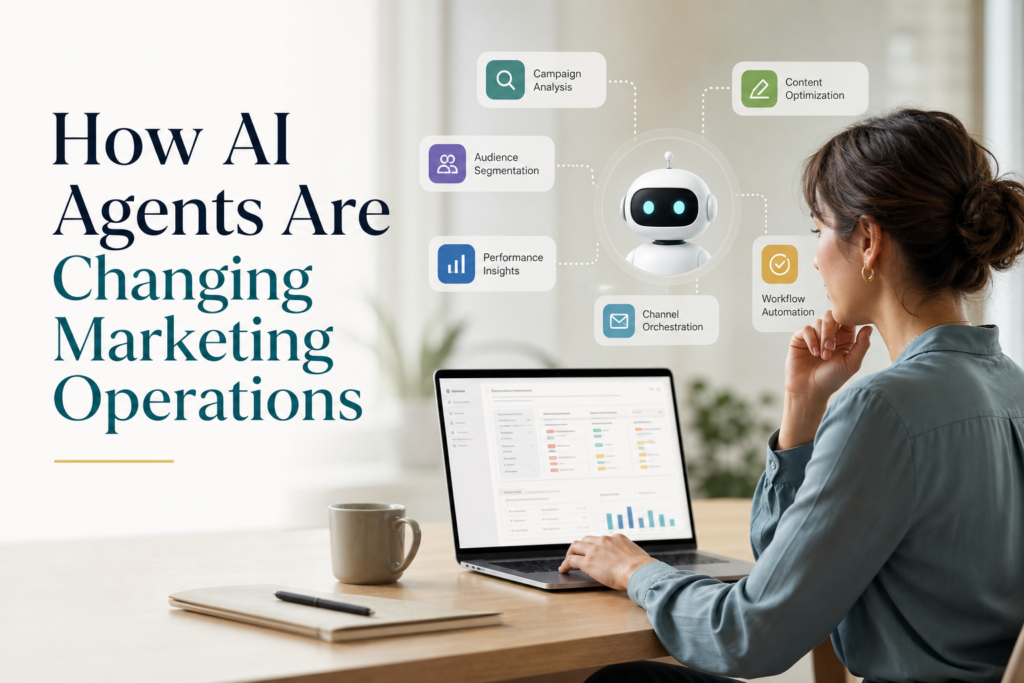
Artificial Intelligence (AI) is reshaping various sectors, and marketing operations are no exception. In a landscape where data-driven decisions are paramount, AI agents are revolutionizing how businesses approach their marketing strategies. This article delves into the substantial changes AI agents are bringing to marketing operations, providing business decision-makers with practical insights on leveraging these technologies.
Understanding AI Agents and Their Role in Marketing

AI agents refer to automated systems that can analyze data, learn from it, and make decisions with minimal human intervention. In marketing, these agents are used to optimize campaigns, analyze consumer behavior, and evaluate performance metrics. By automating routine tasks, AI allows marketing teams to focus on strategic initiatives.
The Decision-Making Power of AI
AI agents sift through vast amounts of data quickly, uncovering insights that may not be apparent through manual analysis. This capability enhances decision-making processes, enabling marketers to respond to trends and consumer needs efficiently. The insights generated can directly influence marketing tactics, ensuring a more agile approach to market changes.
Key Areas AI Agents Enhance Marketing Operations
1. Personalization
AI-driven personalization tailors content to individual user preferences and behaviors. This customization not only improves the user experience but also increases engagement rates. By leveraging AI, marketers can create targeted campaigns that resonate with specific audience segments.
2. Predictive Analytics
Predictive analytics, fueled by AI agents, helps businesses forecast future trends based on historical data. This capability allows companies to allocate resources more efficiently, optimize campaign strategies, and enhance return on investment (ROI). By anticipating customer needs, businesses can stay one step ahead of the competition.
Streamlining Operations Through Automation
One of the most significant advantages of implementing AI agents in marketing is operational efficiency. These agents automate repetitive tasks such as data entry, campaign performance monitoring, and A/B testing. By streamlining these processes, marketers can reduce human error and save time, enabling them to focus on higher-value activities.
Case Example: Campaign Automation

Imagine a scenario where a company runs multiple ad campaigns simultaneously. AI agents can manage these campaigns seamlessly by optimizing bids, analyzing performance in real-time, and reallocating budgets as necessary. This level of automation translates into more effective resource utilization and maximized ad spend efficiency.
Enhancing Customer Insights
Understanding customer perspective is crucial in marketing, and AI provides valuable insights into consumer behavior. AI agents analyze trends from social media, search patterns, and purchase histories to deliver a comprehensive view of customer needs and preferences.
Sentiment Analysis
Leveraging AI for sentiment analysis allows businesses to gauge public opinion about their brand, products, or industry trends. By tracking sentiments across various platforms, companies can adjust their strategies to align with consumer expectations and perceptions.
Challenges and Considerations
While the benefits of AI in marketing operations are substantial, decision-makers should remain aware of potential challenges. Integrating AI solutions requires investment in technology and training. Furthermore, ethical considerations surrounding data privacy must be prioritized to maintain consumer trust.
Staying Competitive
As AI technology continues to evolve, marketers must keep pace with the latest advancements and best practices. Ongoing education and adaptation are essential in harnessing AI’s full potential while navigating the challenges it presents.
Conclusion
AI agents are fundamentally changing the realm of marketing operations by enhancing decision-making, automating routine tasks, and providing unparalleled insights into customer behavior. For business decision-makers, embracing AI technology is no longer a choice but a necessity for remaining competitive in a digital-first world. As these technologies advance, so too should your marketing strategies, making AI an indispensable component of your operations.