
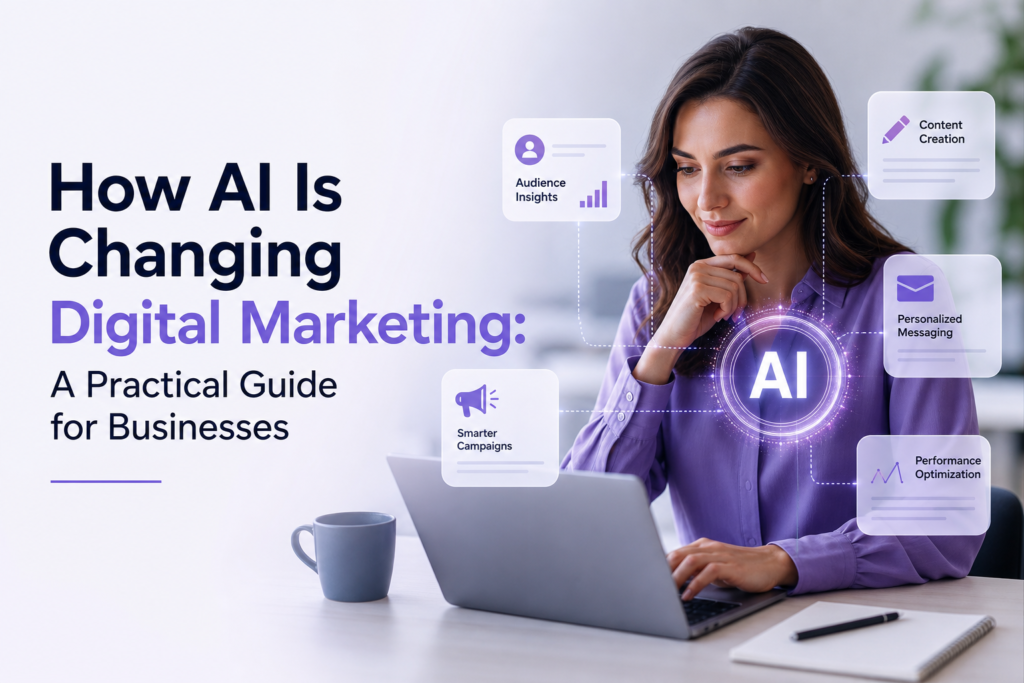
In today’s digital landscape, Artificial Intelligence (AI) is more than a buzzword; it’s a transformative force reshaping how businesses approach marketing. For decision-makers, understanding the implications of AI can be the difference between thriving and falling behind in a competitive market.
The Rise of AI in Digital Marketing
AI technologies have evolved to process vast amounts of data and extract actionable insights. Businesses are increasingly leveraging these capabilities to enhance customer engagement, optimize their strategies, and streamline operations.
Understanding AI Technologies

Before delving into practical applications, it’s essential to grasp the types of AI technologies most relevant to digital marketing:
- Machine Learning: Algorithms that improve through experience and data.
- Natural Language Processing (NLP): Interprets and generates human language, enhancing customer interactions.
- Predictive Analytics: Analyzes historical data to forecast future outcomes.
Enhancing Customer Experience
AI-driven tools enable businesses to create personalized experiences that resonate with their audience. Personalized recommendations, tailored email campaigns, and chatbots are just a few instances where AI can elevate customer engagement.
Personalization at Scale
Using machine learning algorithms, businesses can analyze customer behaviors and preferences to deliver customized content and product suggestions. This level of personalization can significantly increase conversion rates.
24/7 Customer Support
Implementing AI chatbots allows companies to provide immediate customer support. These chatbots can answer frequently asked questions, guide users through processes, and resolve basic issues, improving the overall customer experience.
Data-Driven Decision Making
AI enables businesses to make informed decisions based on data rather than gut feelings. By analyzing robust data sets, companies can refine their strategies effectively.
Predictive Insights

Predictive analytics allow businesses to anticipate customer needs and preferences. By understanding trends, companies can proactively adjust their marketing strategies and inventory management.
CRM and AI Integration
Integrating AI with Customer Relationship Management (CRM) systems can provide deeper insights into customer interactions. This integration helps identify the most valuable customers and tailor communication strategies accordingly.
Streamlining Marketing Operations
AI can significantly reduce the time and resources spent on marketing tasks, allowing teams to focus on strategy and creativity.
Automating Routine Tasks
From scheduling social media posts to managing email campaigns, AI tools can automate repetitive tasks, freeing up valuable time for marketers to pursue high-level strategy development.
Optimizing Ad Spend
AI algorithms can analyze the effectiveness of various ad campaigns in real-time, enabling businesses to optimize spending based on performance metrics. This ensures that budget allocations yield the highest returns.
Challenges and Considerations
While the benefits of AI in digital marketing are significant, there are challenges that businesses must navigate:
- Data Privacy: With increased data analytics, ensuring customer privacy remains a priority.
- Implementation Costs: Initial investment in AI technologies can be substantial, particularly for small or mid-sized businesses.
- Skills Gap: Finding skilled professionals who can leverage AI tools effectively might pose a challenge for some organizations.
Conclusion
AI is undeniably changing the landscape of digital marketing, offering tools and strategies that can enhance customer engagement, improve decision-making, and streamline operations. As businesses increasingly adopt these technologies, it is crucial for decision-makers to stay informed and ready to embrace these changes to maintain a competitive edge.