
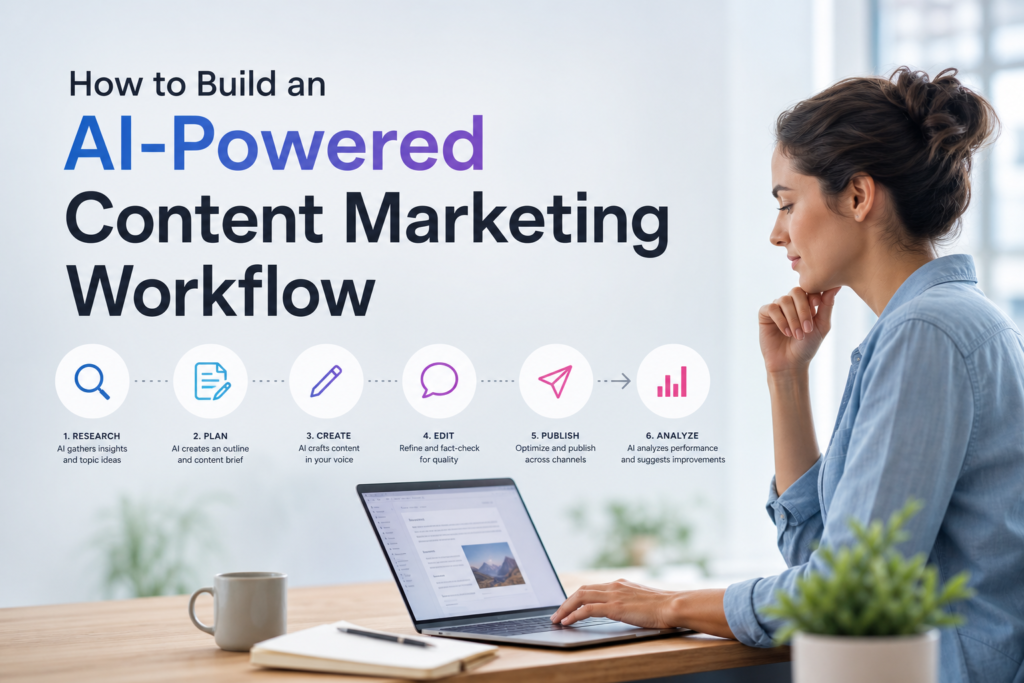
In the fast-paced world of digital marketing, leveraging artificial intelligence (AI) can streamline your content marketing workflow significantly. By integrating AI tools, businesses can enhance efficiency, generate insights, and create more impactful content. In this guide, we’ll explore the steps to build an AI-powered content marketing workflow that caters to your business needs.
Understanding AI in Content Marketing

AI in content marketing involves using machine learning algorithms and data analytics to enhance decision-making, optimize content creation, and improve audience targeting. By harnessing AI, businesses can automate mundane tasks, personalize user experiences, and generate data-driven insights that inform strategic decisions.
Step 1: Assess Your Content Marketing Goals
Before implementing AI into your workflow, it’s essential to define your goals. Consider what you want to achieve with your content marketing efforts. Are you looking to increase brand awareness, generate leads, or enhance customer engagement? Having clear objectives will guide the tools and strategies you choose to implement.
Step 2: Identify Suitable AI Tools
There are numerous AI tools available that cater to different aspects of content marketing. Here are a few categories to consider:
- Content Creation: Tools that assist in generating blog posts, social media updates, and email content.
- SEO Optimization: AI tools that analyze keywords, recommend topics, and help improve search rankings.
- Analytics: Systems that provide insights into audience behavior and content performance.
Research and explore various tools to find what aligns with your business objectives and budget.
Step 3: Create a Content Calendar
Once you have defined your goals and selected your AI tools, the next step is to create a content calendar. A well-planned calendar helps in maintaining a consistent flow of content, allowing your team to map out topics, posting schedules, and responsibilities.
Benefits of a Content Calendar

- Improves team collaboration and accountability.
- Helps in aligning content with marketing campaigns.
- Allows you to plan around seasonal trends and events.
Step 4: Automate Routine Tasks
Utilizing AI to automate repetitive tasks can save time and increase productivity. For example, consider automation for:
- Social media posting and scheduling.
- Email marketing sequences.
- Performance reporting and analysis.
By offloading these tasks to AI, your team can focus on higher-value activities like strategy development and creative brainstorming.
Step 5: Personalize Content
Personalization is a key element of successful content marketing. AI can analyze user behavior and preferences to help you create tailored content that resonates with your audience. Utilize data from past interactions, demographic information, and engagement metrics to inform your content creation process.
Using AI for Personalization
AI tools can assist in segmenting your audience and suggesting content topics based on specific preferences. This targeted approach often results in higher engagement rates and stronger customer relationships.
Step 6: Measure and Analyze Performance
Continuously measuring the performance of your content is crucial. AI can facilitate detailed analytics, providing insights into what content performs best and why. Regularly review engagement metrics, SEO rankings, and lead generation statistics to refine your strategy.
Key Metrics to Track
- Traffic and page views.
- Social media engagement.
- Conversion rates from content pieces.
Step 7: Iterate and Improve
Use the data collected from your performance analysis to make informed improvements to your content marketing workflow. AI allows for rapid iteration, enabling you to test new strategies and adapt to changing audience needs swiftly.
Conclusion
Incorporating AI into your content marketing workflow can revolutionize how you create and distribute content. By assessing your goals, selecting appropriate tools, automating tasks, personalizing content, and analyzing performance, you can create a streamlined, effective content marketing strategy. Embrace these AI-powered strategies to enhance your content marketing efforts and achieve your business objectives.