
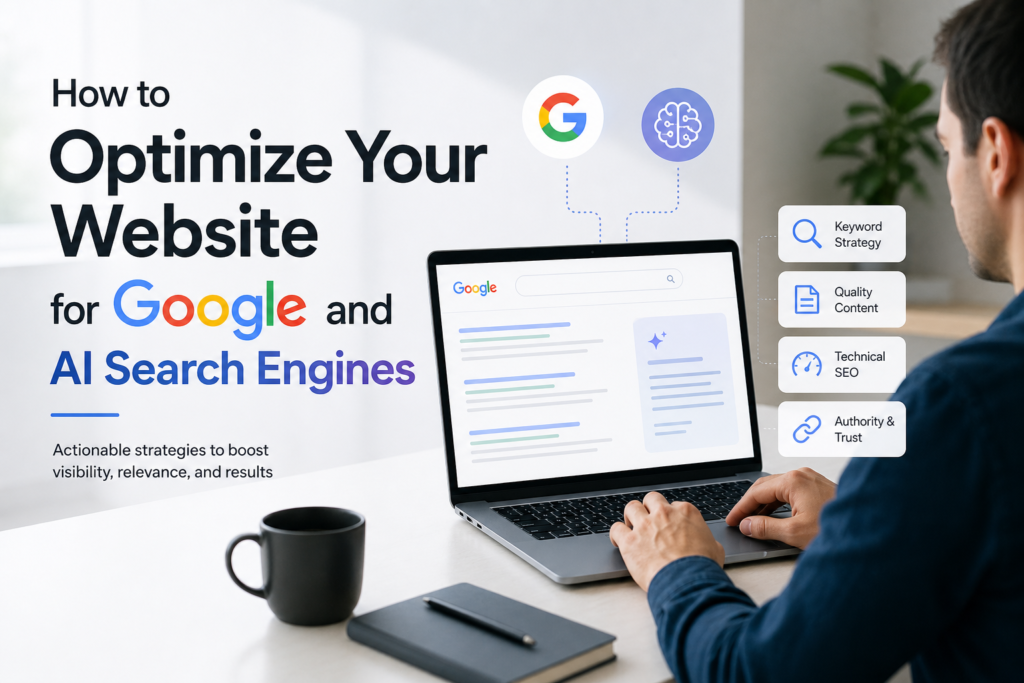
In today’s digital landscape, optimizing your website for search engines like Google and emerging AI platforms is essential for driving traffic and ensuring your business stays competitive. This article outlines practical strategies that business decision-makers can implement to enhance online visibility and improve user experience.
Understanding Search Engine Optimization (SEO)

To effectively optimize your website, it’s crucial to understand the fundamentals of SEO. This involves a combination of on-page and off-page tactics that improve your website’s ranking on search engine results pages (SERPs).
On-Page SEO
- Keyword Research: Identify relevant keywords that potential clients are searching for. Use tools that analyze search volume and competition.
- Content Quality: Create high-quality, informative content that addresses the needs and pain points of your audience.
- Meta Tags: Use descriptive title tags and meta descriptions for each page to improve search visibility.
- Image Optimization: Optimize images with appropriate alt tags and compress them for faster loading speeds.
Off-Page SEO
- Backlink Building: Acquire high-quality backlinks from reputable sites to improve your domain authority.
- Social Media Engagement: Promote your content on social platforms to drive traffic and increase brand awareness.
Leveraging AI for SEO
AI is transforming how search engines analyze and rank content. Understanding how to leverage AI tools can give your business a competitive edge.
Content Creation Tools
Consider using AI-driven content creation tools that can help you generate engaging topics and optimize them for search engines. These tools can analyze what works in your industry and suggest improvements.
User Experience Signals

AI algorithms increasingly prioritize user experience signals. Focus on creating a mobile-friendly and easy-to-navigate website to keep users engaged and reduce bounce rates.
Optimizing for Voice Search
With the rise of voice-activated searches, optimizing your content for voice search can enhance visibility.
Natural Language Processing
Utilize natural language processing by crafting content that answers questions in a conversational tone. This approach aligns with how users speak when using voice search.
Local SEO
If your business relies on local clients, implement location-based keywords in your content and ensure your Google My Business profile is up to date.
Analytics and Continuous Improvement
Finally, utilize analytics tools to track performance and make data-driven decisions. Regularly analyze traffic sources, user interactions, and content effectiveness.
Adjusting Strategies
Continuously adapt your strategies based on performance data. Test new keywords, content formats, and optimization tactics to stay ahead of the curve.
Conclusion
In conclusion, optimizing your website for Google and AI search engines requires a multi-faceted approach. By focusing on both on-page and off-page SEO, leveraging AI tools, and prioritizing user experience, business decision-makers can significantly improve their online visibility and drive more relevant traffic to their sites.