
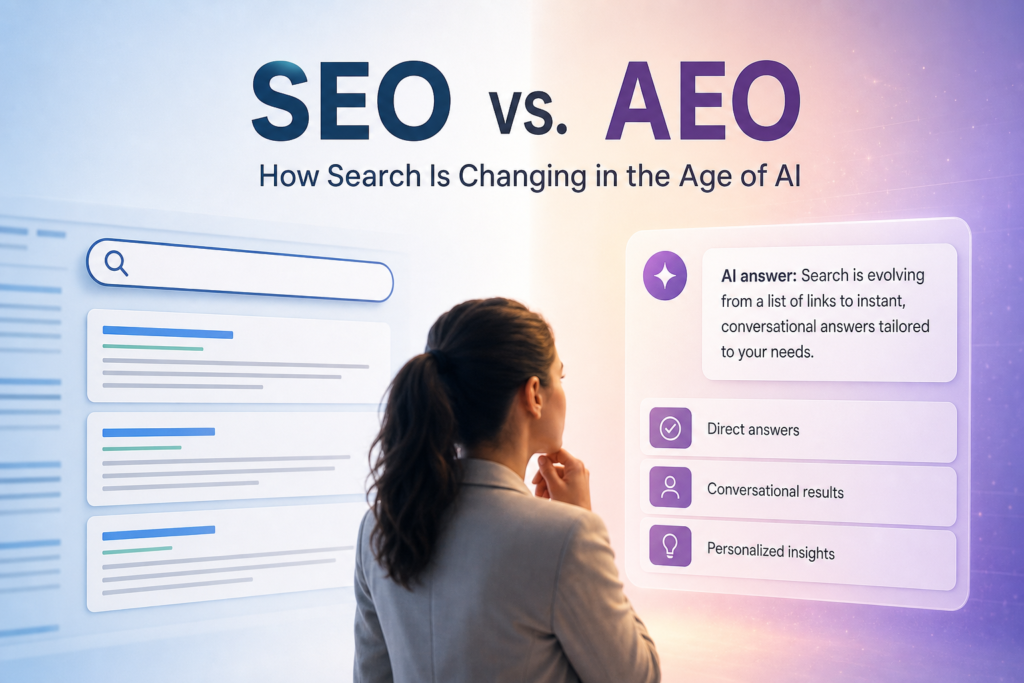
In today’s digital landscape, search strategy is undergoing substantial evolution, especially with the rise of artificial intelligence. Business decision-makers are increasingly faced with the question of how to adapt to these changes. In this article, we will explore the critical differences between Search Engine Optimization (SEO) and Answer Engine Optimization (AEO), and how AI is influencing each.
Understanding SEO and Its Importance
SEO has been a cornerstone of digital marketing for years, focusing on optimizing content to rank higher in search engine results. The main goal of SEO is to attract organic traffic by ensuring that web pages provide value and relevance to users.
Key Components of SEO
- Keyword Research: Understanding user intent and targeting appropriate keywords is essential for crafting content that resonates.
- On-Page Optimization: This includes optimizing titles, meta descriptions, and ensuring proper use of headers.
- Link Building: High-quality backlinks are still vital for improving authority and visibility.
Introducing AEO: The New Frontier
As technology advances, AEO emerges as a key player in the search ecosystem. AEO focuses on providing direct answers to user queries through optimized snippets and voice search results. Unlike traditional SEO, which strives to drive users to websites, AEO aims to deliver answers directly on search engine results pages (SERPs).
The Role of AI in AEO

AI plays a crucial role in optimizing for AEO. With machine learning algorithms, search engines can interpret and process natural language more effectively, delivering nuances of queries and providing quick, relevant responses. This change demands a shift in how content is created and structured.
SEO vs. AEO: A Comparative Analysis

While SEO and AEO may seem similar, their approaches and objectives vary widely. Understanding these differences is essential for businesses looking to stay competitive.
User Intent and Experience
SEO focuses on driving traffic, whereas AEO prioritizes fulfilling user intent. In AEO, the user’s question is answered succinctly, minimizing the need to navigate to external sites.
Content Strategy Implications
- SEO Strategies: Detailed articles, blog posts, and guides that provide depth on a topic.
- AEO Strategies: Short, clear content that directly answers questions, often in list or bullet point format.
How to Implement AEO Alongside SEO
For businesses to thrive, a dual approach that incorporates both SEO and AEO is essential. Consider the following strategies:
1. Optimize for Featured Snippets
By structuring content to answer common questions directly, businesses can increase their chances of being featured as snippets, enhancing visibility.
2. Leverage Structured Data
Implementing structured data helps search engines understand website content better, making it easier for them to present it in answer formats.
3. Enhance Mobile Experience
With the rise of voice search and mobile Internet use, optimizing for mobile is crucial for both SEO and AEO strategies.
Conclusion: The Future of Search
The landscape of search is undeniably shifting in response to technological advancements, particularly AI. Adopting a comprehensive strategy that incorporates both SEO and AEO can position businesses effectively for future growth and success. By balancing traditional optimization tactics with the innovative demands of answer-oriented search, decision-makers can navigate the evolving challenges of digital marketing.