
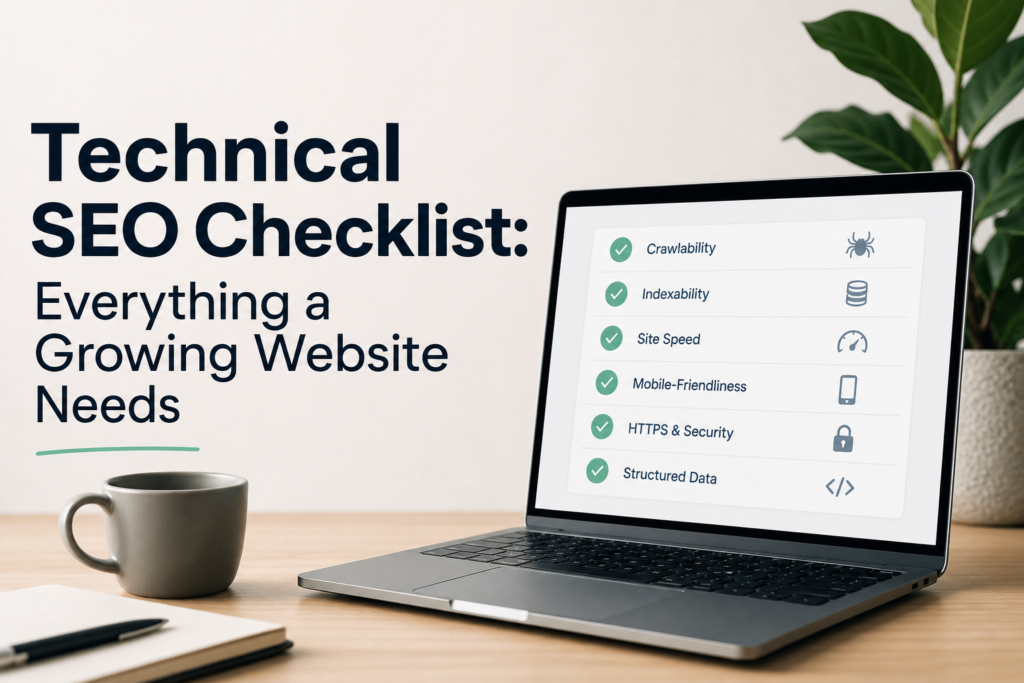
As a growing website, ensuring optimal performance is crucial for attracting and retaining visitors. Technical SEO is the foundation that empowers your site’s ability to rank in search engines effectively. This checklist will guide business decision-makers through essential technical elements that ensure a strong online presence.
1. Optimize Site Speed

Site speed is a critical factor in user experience and search rankings. A slow website can frustrate users and lead to high bounce rates.
Tools for Measuring Speed
- Google PageSpeed Insights
- GTmetrix
- Pingdom
Tips for Improvement
- Minimize HTTP requests.
- Implement browser caching.
- Optimize images and reduce their file sizes.
- Use a Content Delivery Network (CDN).
2. Mobile-Friendliness
A significant portion of online traffic comes from mobile devices. Ensuring your website is responsive will cater to this demographic.
Mobile Optimization Strategies
- Utilize responsive web design.
- Test usability across various devices.
- Use mobile-friendly navigation menus.
3. Secure Your Site with HTTPS
Data security is paramount. Implementing HTTPS not only protects user data but also signals to search engines that your site is trustworthy.
Steps to Transition to HTTPS
- Obtain an SSL certificate.
- Update internal links.
- Redirect HTTP pages to HTTPS.
4. XML Sitemap and Robots.txt
An XML sitemap helps search engines index your pages effectively. Meanwhile, a robots.txt file instructs search engine crawlers on which pages to ignore.
Creating an XML Sitemap
- Use plugins like Yoast SEO.
- Submit the sitemap to Google Search Console.
Managing Your Robots.txt

- Disallow irrelevant pages.
- Allow access to important resources.
5. Structured Data Markup
Structured data helps search engines understand your content better and can enhance your search visibility.
Implementing Schema Markup
- Use Google’s Structured Data Markup Helper.
- Test structured data with Google’s Rich Results Test.
6. Proper URL Structure
SEO-friendly URLs are crucial for both search engines and users. A clear, concise URL structure helps improve click-through rates.
Best Practices for URL Structure
- Use keywords relevant to the content.
- Avoid unnecessary parameters.
- Keep URLs as short as possible.
7. On-Page SEO Essentials
While technical SEO lays the groundwork, on-page elements such as title tags, meta descriptions, and header tags also play crucial roles in search rankings.
Optimizing On-Page Elements
- Include primary keywords in title tags.
- Create compelling meta descriptions that summarize page content.
- Utilize header tags for better content organization.
8. Monitor and Fix Crawl Errors
Regularly checking for crawl errors ensures that search engines can access your site without issues.
Using Google Search Console
- Monitor coverage reports.
- Fix or remove broken links.
Conclusion
Implementing a robust technical SEO checklist is essential for any growing website. By prioritizing site speed, ensuring mobile-friendliness, adopting HTTPS, and refining other technical elements, business decision-makers can foster a strong online presence that attracts and retains users. Regular audits of your technical setup will ensure continued performance improvement and search visibility.