
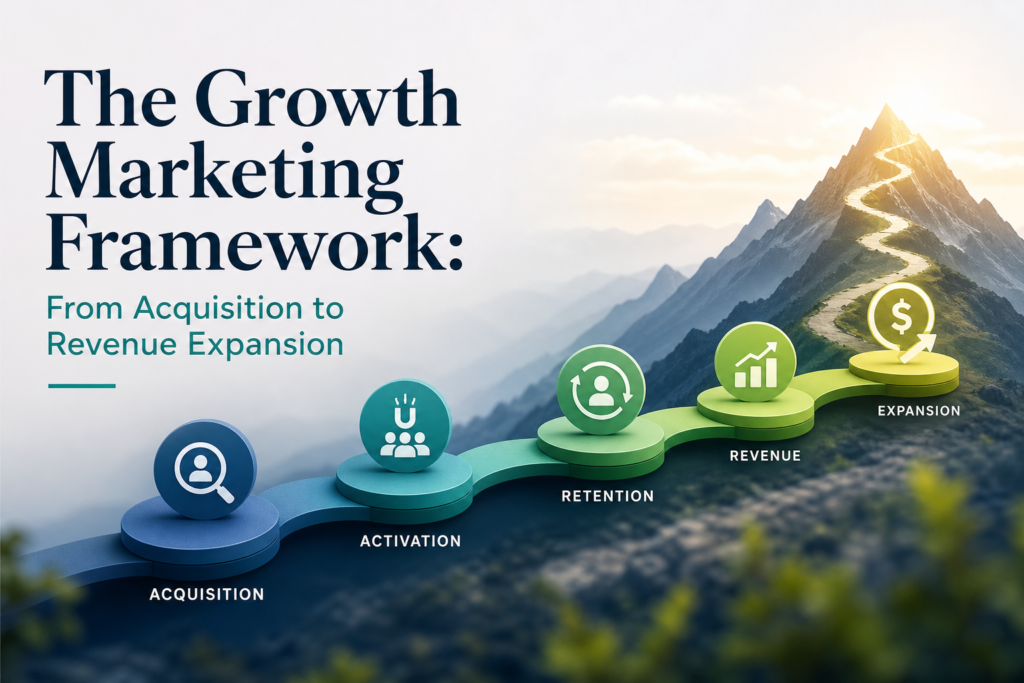
In today’s competitive landscape, businesses must adopt a strategic approach to growth marketing that goes beyond traditional methods. This article delves into a comprehensive growth marketing framework, emphasizing the journey from customer acquisition to revenue expansion.
Understanding Growth Marketing
Growth marketing is an iterative process focused on optimizing every stage of the customer journey. It combines various strategies, channels, and metrics to ensure sustainable business growth. Unlike conventional marketing, which often prioritizes brand awareness, growth marketing emphasizes measurable outcomes through experiments and data analysis.
The Key Stages of Growth Marketing
- Acquisition: Attracting potential customers through targeted strategies.
- Activation: Ensuring that users have a positive initial experience.
- Retention: Keeping customers engaged and coming back.
- Revenue: Converting engaged users into paying customers.
- Referral: Encouraging existing customers to recommend your product.
Stage 1: Acquisition – Strategies for Success
The first step in your growth marketing framework is acquisition. This stage is crucial as it lays the foundation for future growth. Here are some effective strategies to attract the right audience:
Targeted Content Marketing
Create valuable and informative content that addresses the pain points of your target audience. Use SEO techniques to ensure your content is discoverable on search engines.
PPC Campaigns
Utilize pay-per-click advertising focused on specific demographics to drive targeted traffic. Monitor and optimize campaigns to achieve a positive return on investment.
Stage 2: Activation – Enhancing User Experience

Once you’ve attracted potential customers, it’s essential to ensure they have a positive initial experience with your product or service. Here are some ways to achieve successful activation:
Onboarding Processes
Implement a seamless onboarding process that guides users through your product’s features. This could include tutorials, walkthroughs, or interactive guides to enhance user understanding and satisfaction.
Immediate Value Delivery
Make sure new users can quickly experience the value of your offering. Offer free trials, discounts, or additional resources that provide immediate benefits.
Stage 3: Retention – Keeping Customers Coming Back
Retaining customers is vital for sustainable growth. Focus on building long-lasting relationships through effective retention strategies:
Personalized Communication
Use data analytics to personalize communication with customers. Understand their preferences and needs, and tailor your messages to enhance engagement.
Loyalty Programs
Implement loyalty programs that reward repeat customers. This not only increases retention but also encourages larger purchases over time.
Stage 4: Revenue – Monetization Strategies
The revenue stage focuses on converting engaged users into paying customers. Here are effective monetization strategies:
Upselling and Cross-Selling
Leverage data to identify opportunities for upselling and cross-selling. Offer complementary products or premium features that enhance customers’ experience.
Flexible Pricing Models
Experiment with different pricing strategies, including subscription models, tiered pricing, and discounts for long-term commitments to find what resonates with your audience.
Stage 5: Referral – Leveraging Customer Advocacy
The final stage of the growth marketing framework is referral, where existing customers help you acquire new ones. Utilize these strategies to encourage referrals:
Referral Programs
Incentivize happy customers to refer friends and family by offering discounts or rewards. This not only helps acquire new customers but strengthens existing relationships.
Social Proof and Testimonials
Highlight positive customer experiences through testimonials and case studies. This builds trust with potential customers and enhances the likelihood of referrals.
Conclusion: A Holistic Approach to Growth
Implementing a growth marketing framework requires a holistic approach that encompasses acquisition, activation, retention, revenue, and referral. Each stage is interlinked; focusing on one area can significantly impact the others. By utilizing the strategies outlined in this article, business decision-makers can create a sustainable growth model that adapts to evolving market dynamics.